
AI Won't Replace You. Your Ignorance Will.
Every day I see programmers celebrating that AI writes code for them. But when you ask them why they chose that architecture, how they handle eventual consistency, or what trade-offs they evaluated... silence.
AI is a powerful tool. But if you don't understand the fundamentals, you're a prompt operator, not an engineer.
These 12 books are what make the difference between the developer AI replaces and the engineer AI empowers.
1. Designing Data-Intensive Applications
Martin Kleppmann
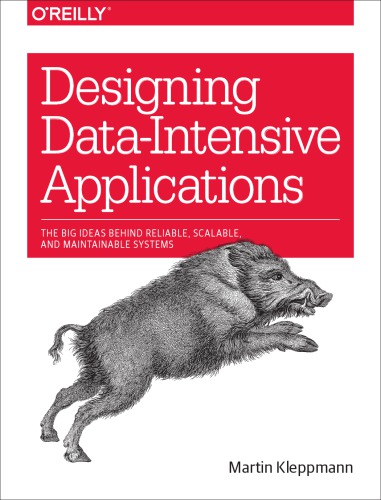
This is the modern "bible." AI can write a query, but it can't design a distributed architecture that supports millions of users with consistency and scalability. This book is essential for understanding large-scale backend systems.
2. Modern Software Engineering
David Farley
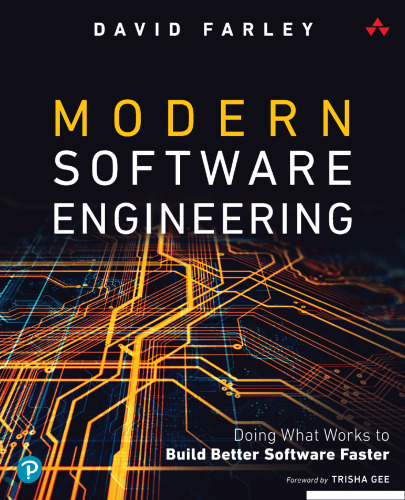
Farley argues that we've forgotten what "engineering" truly means. In the post-AI era, we need to return to first principles: iteration, feedback, modularity, and separation of concerns. It's the manifesto for the engineer who manages intelligent tools.
3. The AI-Powered Developer
Nathan B. Crocker
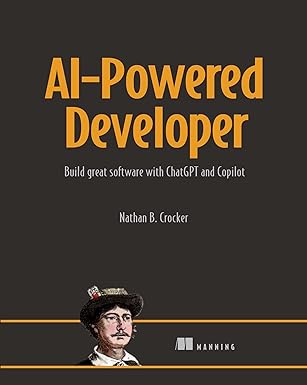
One of the first serious books on how to integrate LLMs into the development workflow. It's not about copying and pasting -- it's about using AI for testing, refactoring, and architecture without losing control of the system.
4. The Pragmatic Programmer
David Thomas & Andrew Hunt
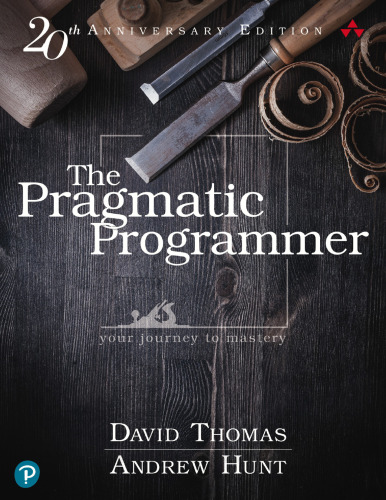
A classic that ages like fine wine. It teaches the mindset: take responsibility, don't repeat mistakes (DRY), and treat software as a craft. Perfect for remembering that the programmer is the pilot, and AI is just the copilot.
5. Clean Code
Robert C. Martin
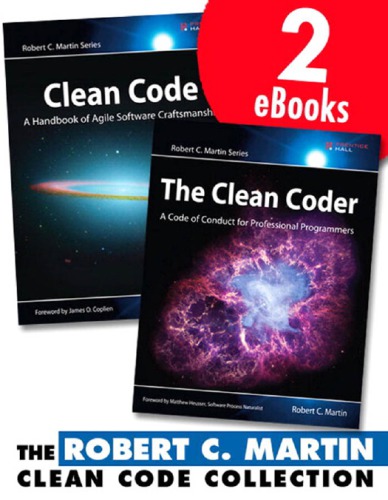
Many say AI will make code "clean," but the reality is it generates a lot of noise. To audit what AI produces, you need to know what maintainable code looks like. If you can't read clean code, you can't fix the messy code a machine generates.
6. A Philosophy of Software Design
John Ousterhout
Many consider this book to have surpassed Clean Code. It focuses on complexity. AI tends to generate solutions that work but are complex; Ousterhout teaches you how to keep systems simple and modular.
7. Refactoring
Martin Fowler
AI is great at generating new code but terrible at maintaining complex legacy systems. Learning Fowler's techniques is vital for cleaning up and improving the structure of existing code without breaking functionality.
8. Fundamentals of Software Architecture
Mark Richards & Neal Ford
AI doesn't understand trade-offs. This book teaches you when to use microservices, when to stick with a monolith, and how to evaluate the "-ilities" (scalability, maintainability, etc.). Architecture is the arena where humans still win.
9. Building Microservices
Sam Newman
As AI lets us build faster, the complexity of how we connect those pieces explodes. Newman explains how to model services, manage security, and observe distributed systems.
10. Team Topologies
Matthew Skelton & Manuel Pais
Software is a socio-technical system. AI doesn't solve communication problems between teams. This book is key to understanding how to organize people so that value flow doesn't get stuck at human bottlenecks.
11. Accelerate
Nicole Forsgren, Jez Humble & Gene Kim
In the era of extreme AI-driven speed, how do we measure success? This data-driven book explains what separates high-performing companies from the rest. It's not about lines of code -- it's about delivering value.
12. The Mythical Man-Month
Frederick P. Brooks Jr.
Written decades ago, but more relevant than ever. It reminds us that "adding more resources (or more AI) to a late project makes it later." It's the cure for blind technological optimism.
Download All 12 Books for Free
I've compiled all 12 books into a single ZIP file so you can start reading them today.
Download the 12 books (ZIP - 113MB)
These books are shared for educational purposes. If you find them useful, please consider buying the official versions to support the authors.
Final Thoughts
AI is the most powerful tool we've ever had as engineers. But a powerful tool in the hands of someone without fundamentals is dangerous.
These books aren't optional. They're the foundation that separates the engineer who leads projects from the one who just copies and pastes ChatGPT outputs.
The question isn't whether AI will replace you. The question is: do you have the judgment to direct it?
If you want to dive deeper into scalable architecture, also read why your monolith doesn't scale or how to integrate LLMs into enterprise workflows.
If you found this content useful, share it with your team. And if you need help implementing these ideas in your organization, let's talk.